ARN & CO.
+974 7715 1144 info@arnandco.com
QATAR Office

Introduction to the State of Qatar

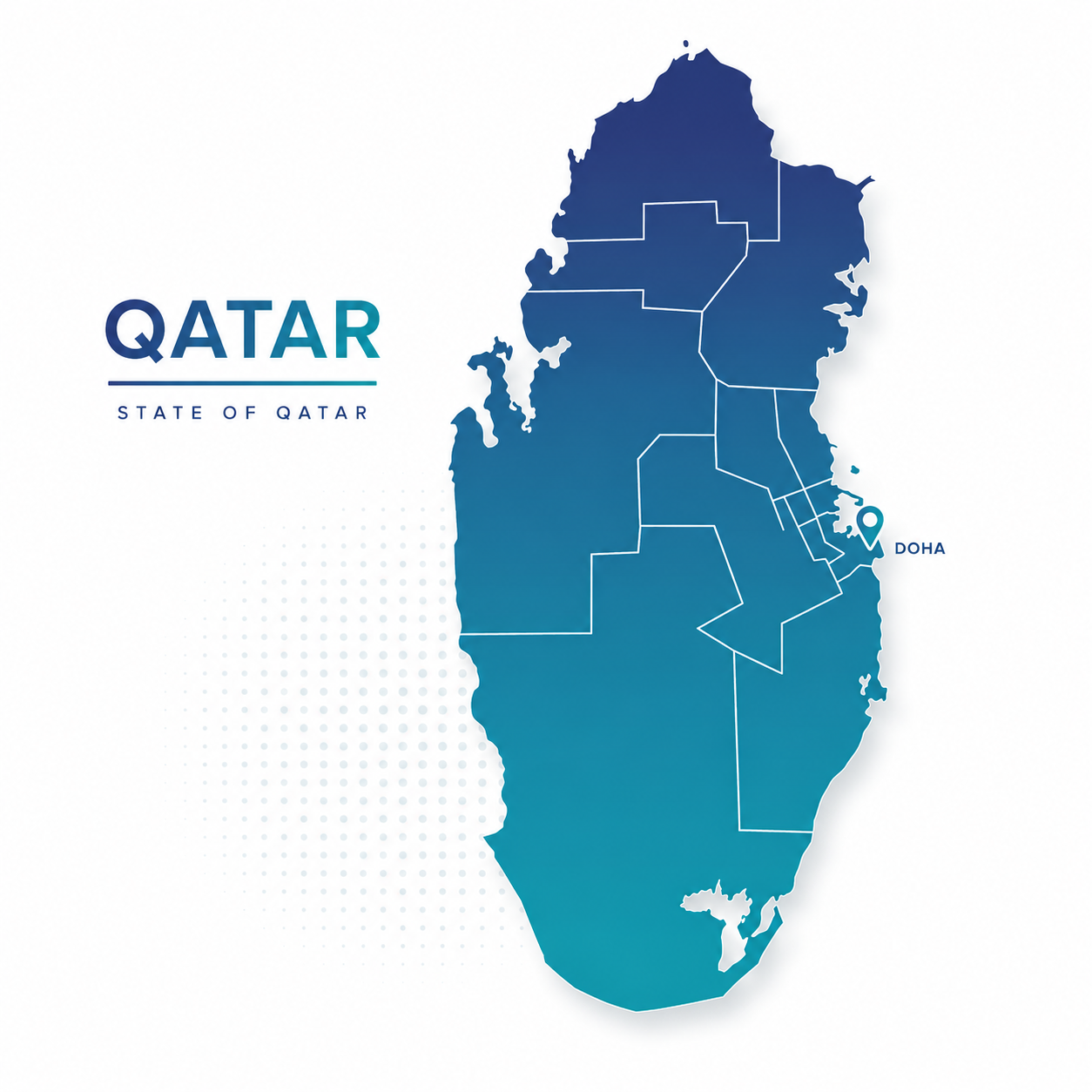
The State of Qatar (Arabic: دولة قطر) is a sovereign nation located on the northeastern coast of the Arabian Peninsula in the Middle East. Bordered by the Arabian Gulf and sharing its only land border with the Kingdom of Saudi Arabia, Qatar has emerged as one of the region's leading economies and a global hub for business, investment, energy, and innovation.

Doha, the nation's capital and largest city, serves as the country's political, financial, and commercial center. Arabic is the official language, while English is widely used in business, finance, and international trade.

Driven by Qatar National Vision 2030, the country continues to diversify its economy beyond hydrocarbons through significant investments in infrastructure, technology, financial services, tourism, education, healthcare, and sustainable development.

Geography & Economy

Qatar occupies approximately 11,600 square kilometers on a peninsula extending into the Arabian Gulf. Despite its relatively small geographical size, Qatar is recognized as one of the world's wealthiest countries by GDP per capita and offers a stable, business-friendly environment that attracts both regional and international investors.

The country's economy is supported by a strong energy sector, particularly natural gas and liquefied natural gas (LNG), while ongoing diversification has strengthened sectors including:

  • Financial Services
  • Construction & Real Estate
  • Hospitality & Tourism
  • Transportation & Logistics
  • Manufacturing
  • Technology & Innovation
  • Healthcare & Education
  • Sports & Major International Events

Qatar's modern legal framework, strategic location, world-class infrastructure, and investment-friendly policies have positioned it as a preferred destination for multinational corporations, entrepreneurs, and foreign investors.

History

The modern State of Qatar gained full independence on 3 September 1971. Since then, the country has experienced remarkable economic growth and social development, transforming into a globally recognized center for commerce, finance, diplomacy, and international investment.

Today, Qatar is home to internationally respected institutions such as the Qatar Financial Centre (QFC), Qatar Free Zones Authority (QFZ), and the Qatar Development Bank (QDB), all of which play a vital role in promoting business growth, foreign investment, entrepreneurship, and economic diversification.

Through its continued commitment to innovation, sustainability, and excellence, Qatar continues to strengthen its position as one of the Middle East's leading destinations for business and investment.

Transportation

Qatar has invested significantly in developing a modern and integrated transportation network. The country benefits from an extensive system of highways, bridges, public transportation, and smart mobility solutions that efficiently connect residential, commercial, and industrial areas.

Key transportation infrastructure includes:

  • Hamad International Airport, consistently ranked among the world's leading airports.
  • Doha Metro, providing fast and reliable transportation across the capital.
  • An extensive public bus network and regulated taxi services.
  • Modern road infrastructure connecting major cities and industrial zones.
  • Hamad Port, one of the largest and most advanced commercial ports in the region.

Qatar's strategic location makes it an important gateway connecting the Middle East with Europe, Asia, and Africa, supporting international trade, tourism, and investment.

Currency

The official currency of Qatar is the Qatari Riyal (QAR), issued by the Qatar Central Bank (QCB).

The Qatari Riyal has remained pegged to the US Dollar at approximately USD 1 = QAR 3.64, providing long-term stability and confidence for businesses, investors, and international organizations.

Hamad International Airport

Financial Markets

Qatar's primary securities market is the Qatar Stock Exchange (QSE), one of the region's leading financial markets.

The exchange lists companies operating across banking, insurance, telecommunications, industrial, real estate, transportation, and consumer sectors.

The country's financial system is supported by the Qatar Financial Centre (QFC) and Qatar Central Bank (QCB), ensuring a transparent, stable, and internationally competitive financial environment.

Government & Legal System

The State of Qatar is a constitutional monarchy led by His Highness the Amir, with a legal and regulatory framework designed to promote stability, transparency, and sustainable economic growth.

Qatar's legal system is primarily based on civil law principles influenced by Islamic Sharia, while specialized legal frameworks govern commercial, financial, and investment activities.

The country has developed a modern regulatory environment that supports local and international businesses through institutions including the Qatar Financial Centre (QFC), Qatar Free Zones Authority (QFZ), Ministry of Commerce and Industry (MOCI), and Qatar Central Bank (QCB). These organizations provide a strong legal foundation that promotes investment, protects businesses, and supports long-term economic diversification.

Population

Qatar has a population of approximately 3 million people, consisting of both Qatari nationals and a large international expatriate community representing more than 100 nationalities.

This multicultural workforce has played an important role in Qatar's rapid economic development and has positioned the country as one of the most internationally diverse business environments in the Middle East.

Official Language

Arabic is the official language of the State of Qatar. However, English is widely used throughout the business, financial, legal, and commercial sectors, making Qatar an accessible destination for international investors and multinational organizations.

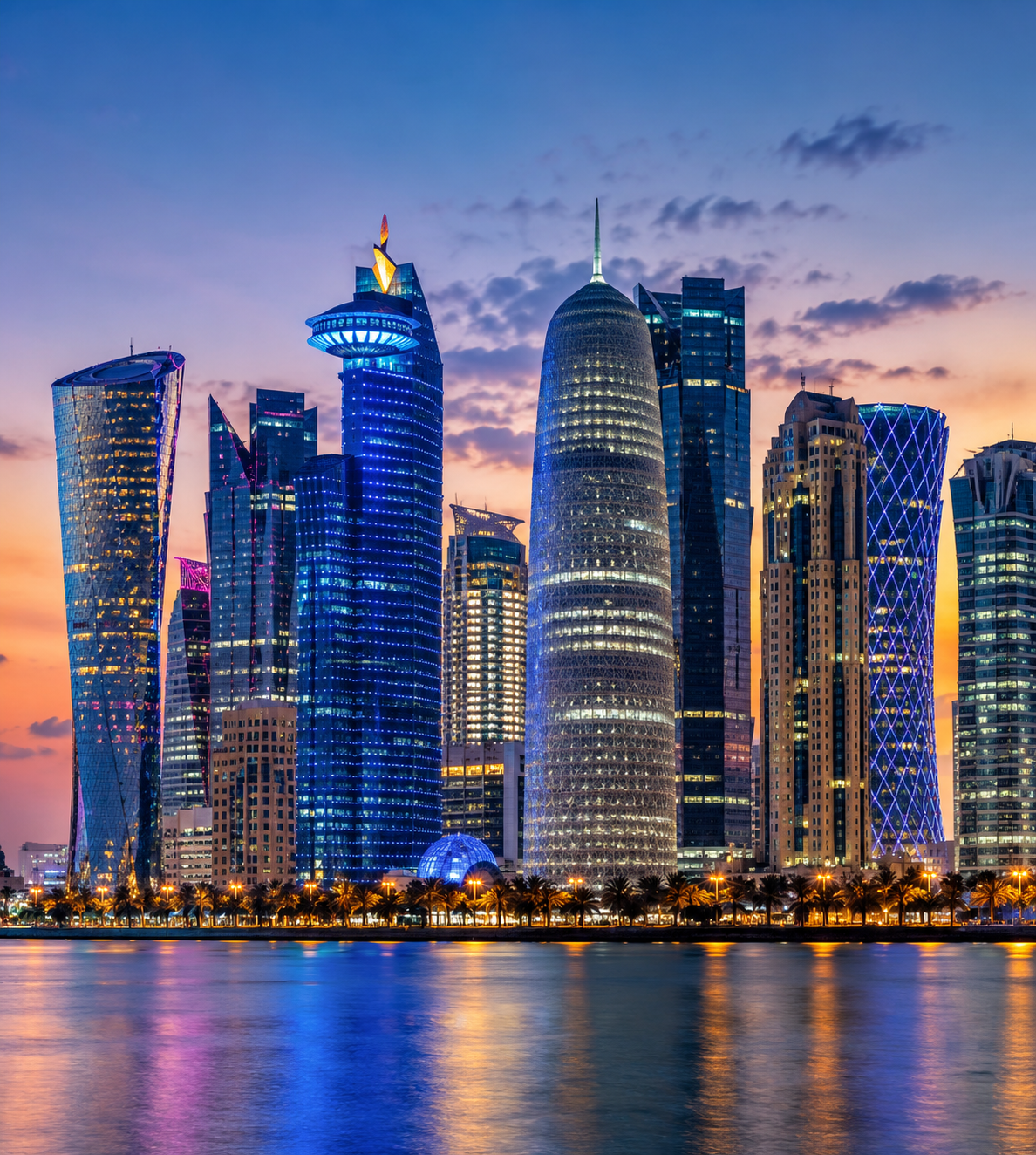
Doha Skyline

Quality of Life

Qatar offers one of the highest standards of living in the Middle East, combining modern infrastructure, world-class healthcare, excellent educational institutions, and a safe, family-friendly environment.

Residents enjoy a high quality of life supported by efficient public services, advanced digital infrastructure, and a multicultural society.

Qatar provides a wide range of lifestyle and recreational opportunities including:

  • Modern shopping malls and traditional souqs
  • Luxury hotels and international restaurants
  • Beaches, desert adventures and water sports
  • Parks, museums and cultural attractions
  • International sporting events and entertainment venues

The country's commitment to sustainable development, innovation, and community well-being continues to enhance its reputation as one of the region's most desirable places to live and work.

Qatar Heritage

Why Invest in Qatar

Qatar offers a stable, investor-friendly environment supported by a diversified economy, strong financial institutions, and government initiatives that encourage foreign investment and private sector growth.

Key advantages include:

  • Strategic geographic location connecting global markets.
  • Stable political and economic environment.
  • One of the world's strongest economies with a high GDP per capita.
  • Business-friendly regulatory framework.
  • Competitive corporate tax environment.
  • World-class infrastructure and digital connectivity.
  • Access to highly skilled local and international talent.
  • Investment opportunities across energy, finance, construction, healthcare, education, logistics, hospitality, manufacturing, and technology.
  • Support from Qatar Financial Centre (QFC), Qatar Free Zones Authority (QFZ), Invest Qatar, and Qatar Development Bank (QDB).

These advantages continue to position Qatar as one of the Middle East's leading destinations for foreign direct investment, regional headquarters, and business expansion.

Tax Environment

Qatar maintains a competitive tax system designed to encourage investment, entrepreneurship, and sustainable business growth.

Key features include:

  • No personal income tax.
  • Competitive corporate tax regime.
  • Modern tax regulations aligned with international standards.
  • Robust compliance framework supporting transparency and responsible business practices.
  • Efficient regulatory environment for local and international investors.

Through continuous economic reforms and investment-friendly policies, Qatar remains one of the region's most attractive jurisdictions for establishing and expanding businesses.

Economy

Qatar has one of the strongest and most resilient economies in the world, supported by its leadership in natural gas production and its long-term diversification strategy under Qatar National Vision 2030.

While the energy sector continues to play a significant role, the government has successfully expanded investment into strategic sectors including:

  • Financial Services
  • Construction & Infrastructure
  • Real Estate
  • Technology & Innovation
  • Healthcare
  • Education
  • Tourism & Hospitality
  • Manufacturing
  • Logistics & Transportation
  • Sports & Entertainment

Qatar's investment-friendly policies, world-class infrastructure, and strategic location continue to attract multinational corporations and international investors seeking regional headquarters and business expansion opportunities.

Education

Qatar has made significant investments in education and human capital development, creating one of the region's most advanced educational ecosystems.

The country is home to internationally recognized universities and research institutions, including Education City, which hosts leading global universities alongside Qatar-based institutions.

Public and private schools offer internationally recognized curricula, including British, American, International Baccalaureate (IB), Indian, and other educational systems.

Education is overseen by the Ministry of Education and Higher Education, ensuring high academic standards while supporting continuous innovation and workforce development.

Through sustained investment in education, research, and innovation, Qatar continues to develop a highly skilled workforce capable of supporting the country's long-term economic growth and diversification objectives.